Doc Wallet | Photo Estimate Tool
From Accident to Repair, Without the Friction
Final Outcome
45% -> 88%
Photo Estimate Completion
INCREASE PHOTO ESTIMATE TOOL COMPLETION BY 43%
REDUSED BY 72.7%
Number of support calls during Photo Estimate
FOR 100 REPAIR ORDERS: REDUSED CALLS FROM 88 TO 24
Overview
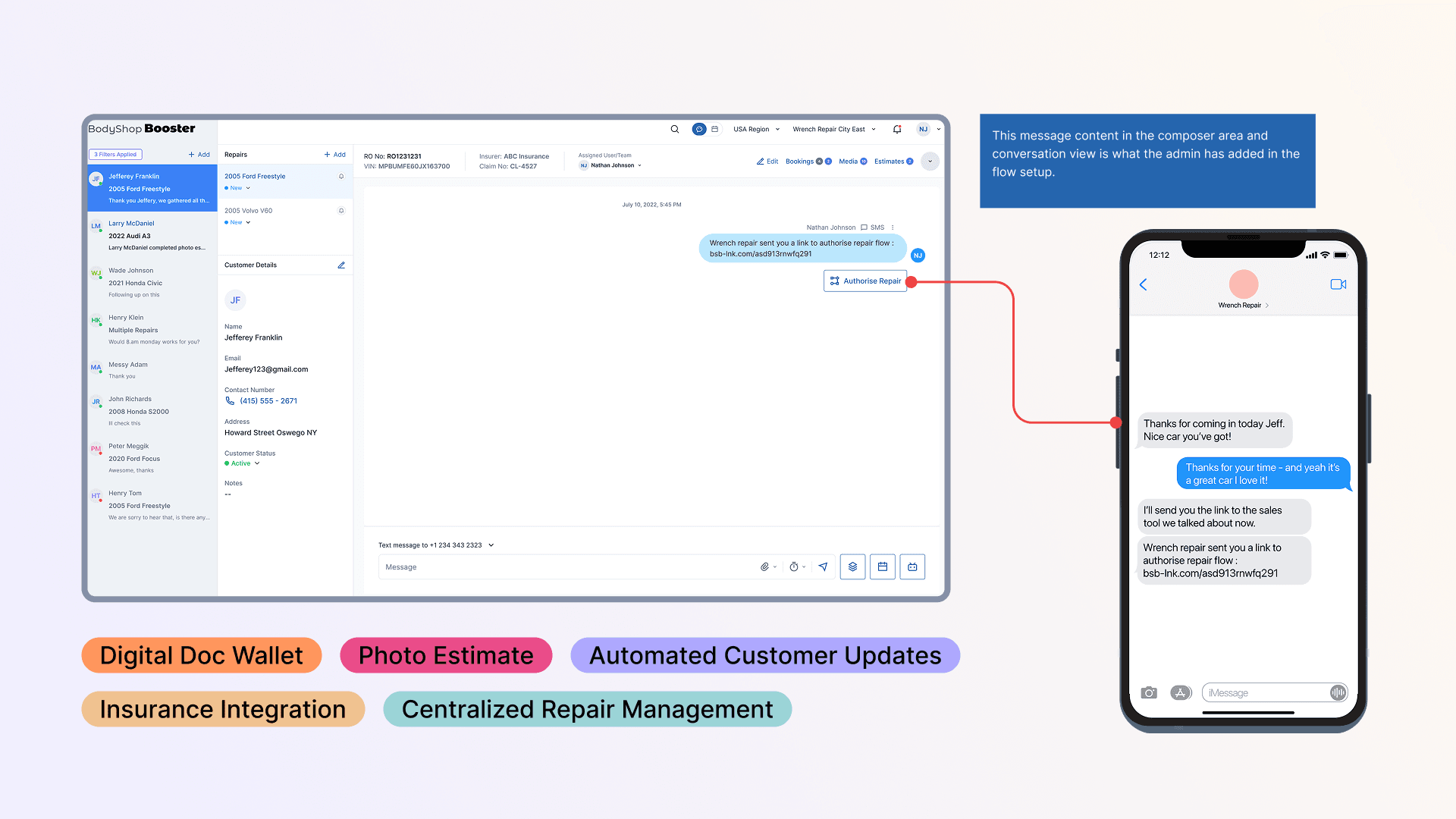
Booster is a vehicle body repair management platform designed to simplify and streamline the repair journey for body shops, insurance companies, and customers.
The project focused on transforming fragmented, manual processes into a connected digital workflow. I worked on the UX and UI design of the CRM, with a particular focus on Doc Wallet and Photo Estimate helping repair teams manage documents, capture vehicle damage, create estimates, and communicate with customers more efficiently.
Through user research, Hotjar analysis, workflow optimization, and iterative design, we reduced unnecessary steps and improved visibility across the repair lifecycle.
The problem wasn't just repairing vehicles. It was coordinating people.
When a vehicle is involved in an accident, the repair process often involves multiple parties:
Vehicle Owner → Insurance Company → Bodyshop → Vehicle Owner → Insurance Company
Each handoff creates opportunities for delays, missing information, repeated communication, and manual work.
Booster's existing ecosystem included a CRM used by bodyshop teams to manage repair operations. Rather than focusing this case study on the internal CRM, I focused on two customer-facing experiences that connected the repair process:
Doc Wallet
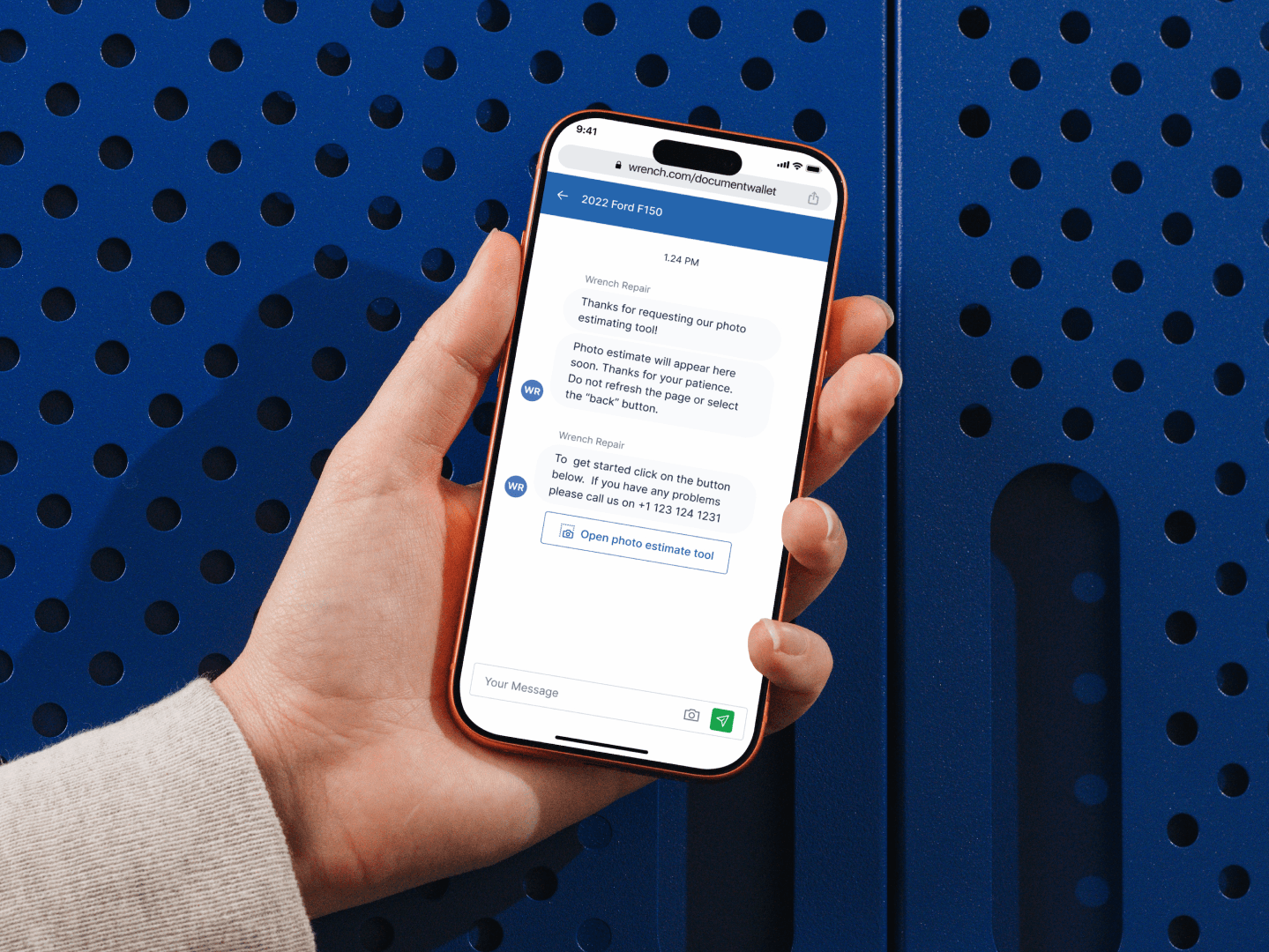
A mobile responsive web application where vehicle owners and bodyshop teams can communicate, exchange information, review estimates, and track repair progress.
Photo Estimate
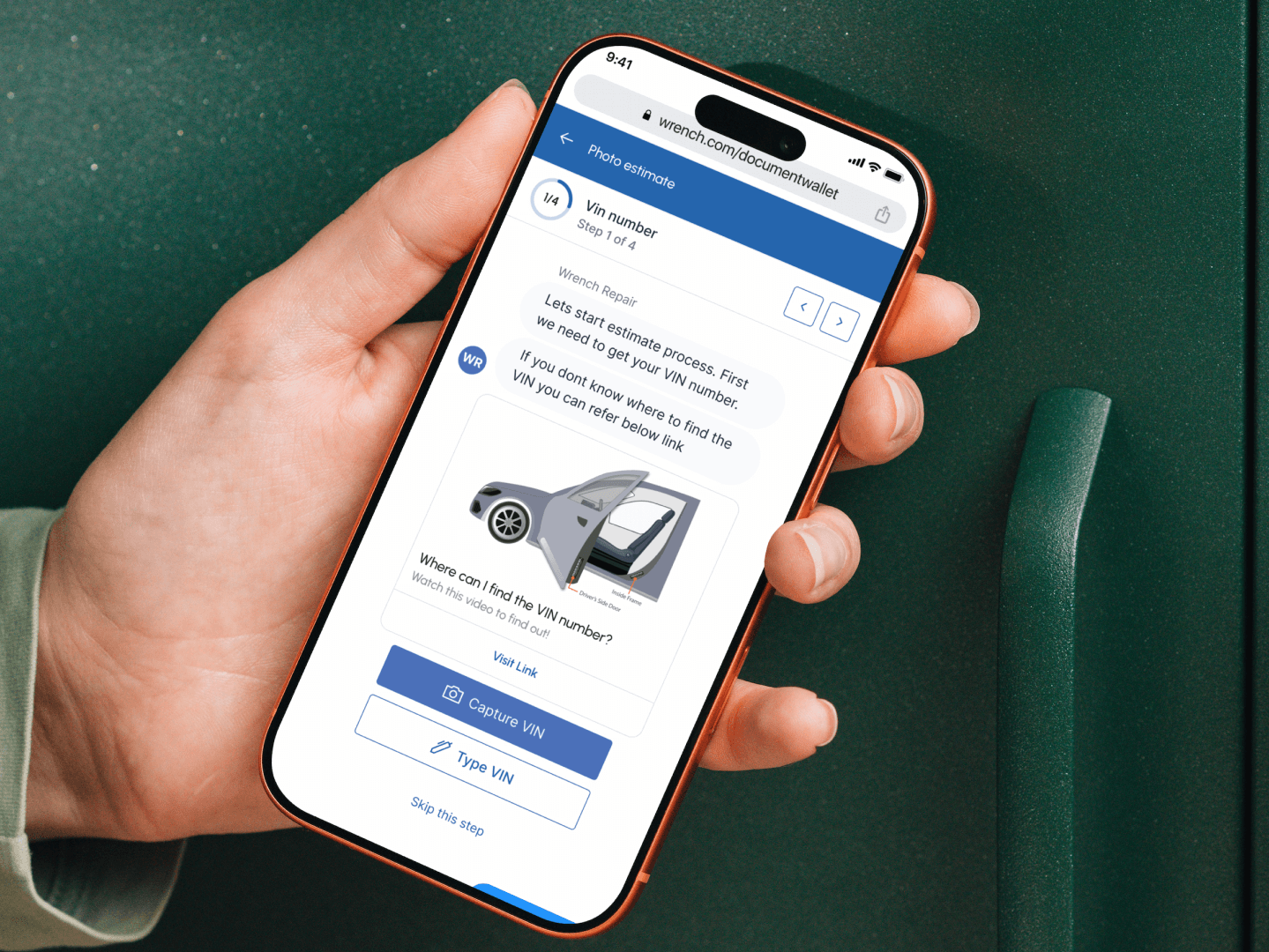
A guided digital assessment tool that allows vehicle owners to capture their vehicle information and damage photos remotely, eliminating the need to start the assessment process through manual communication.
Together, these experiences created a digital bridge between the vehicle owner, bodyshop, and insurance company.
Approach
Designing the journey, not just the interface.
I approached the project as an end to end service experience rather than two isolated products.
01. Understand the repair journey
Mapped the existing journey from:
Accident → Insurance → Repair Order → Bodyshop → Vehicle Owner → Estimate → Approval → Repair
This helped identify where communication and information were being lost.
02. Identify high-friction moments
Focused on moments that required:
-> Phone Calls
-> Manual information collection
-> Repeated communication
-> Physical vehicle inspections
-> Estimate follow-ups
-> Approval coordination
03. Design the connected experience
Designed Doc Wallet as the central customer facing hub.
From there, vehicle owners could access the Photo Estimate experience, communicate with the bodyshop, review estimates, and follow repair progress.
04. Validate
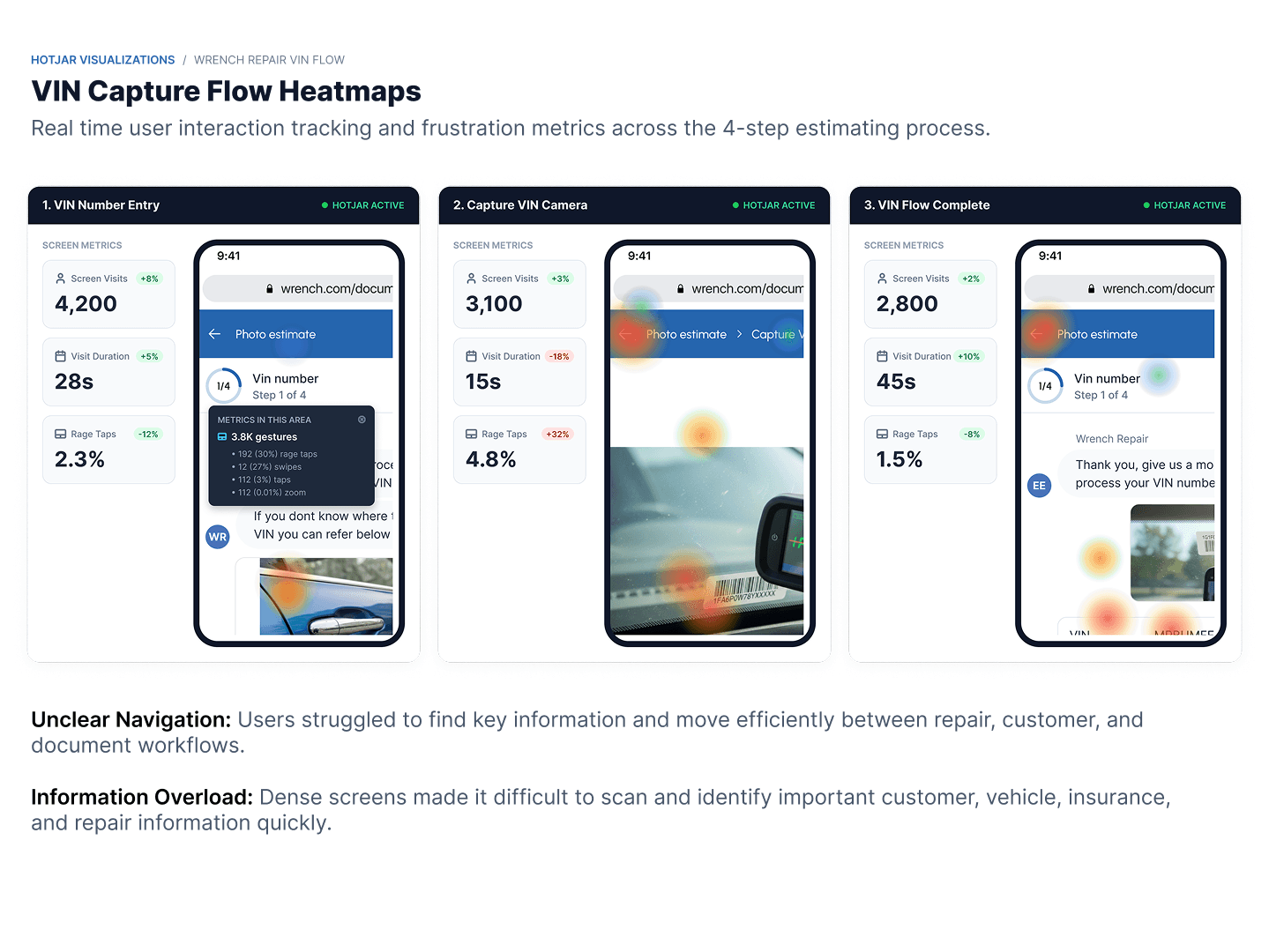
After the first Photo Estimate implementation showed poor completion, I used:
Hotjar
Behavioral analysis
Usability testing
Session observation
Interaction analysis
to understand where users were struggling.
05. Iterate
The research revealed that the major friction wasn't the overall concept it was the photo capture interaction.
I redesigned that experience around clearer guidance, simpler steps, better feedback, and reduced cognitive load.
06. Measure
The redesigned experience increased photo-estimate completion from:
45% → 88%
Challenge
How do you digitize a process that depends on three different parties?
The repair journey involved three key stakeholders:
02. Vehicle Owner
wants to:
Understand what happens next
Submit information easily
Avoid unnecessary visits
Communicate with the bodyshop
Approve estimates quickly
Track repair progress
02. Bodyshop
Needs to:
Receive accurate vehicle information
Collect damage evidence
Communicate with customers
Prepare estimates
Receive approvals
Keep the repair process moving
03. Insurance Company
Needs:
Accurate documentation
Vehicle information
Damage evidence
Repair estimates
Approval workflows
The challenge was creating a single digital journey that reduced friction for all three without overwhelming the vehicle owner.
Problem Statement
Vehicle owners, bodyshops, and insurance companies were dependent on fragmented communication and manual information exchange throughout the repair journey. This created unnecessary delays, repetitive work, and friction when collecting vehicle and damage information.
Goal
Make the repair journey feel as simple as sending a message.
For Vehicle Owners
Reduce effort required to provide information
Make damage capture simple
Provide visibility into repair progress
Make communication easier
Enable remote estimate approval
For Bodyshops
Reduce manual information collection
Improve quality of submitted information
Reduce communication overhead
Accelerate estimate preparation
Reduce approval delays
For the Business
Digitize customer interactions
Reduce operational overhead
Improve repair turnaround
Increase process visibility
Create a scalable customer communication layer
Pain Points
Too much communication happens manually
- Vehicle owners and bodyshops rely heavily on phone calls, emails, and repeated follow-ups.
- Impact: Communication becomes difficult to track and slows the repair process.
Vehicle information has to be collected accurately
- VIN, customer details, insurance information, and vehicle damage information are critical to the repair process.
- Impact: Missing or incorrect information creates additional work for bodyshop employees.
Damage assessment can require physical coordination
- Traditional assessment workflows may require customers to bring the vehicle to the bodyshop before sufficient information can be collected.
- Impact: More coordination, travel, waiting time, and operational effort.
Estimates create another communication bottleneck
- Once an estimate is prepared, customers and insurance companies need to review and approve it.
- Impact: Approval delays can prevent repair work from progressing.
Photo capture was the biggest digital friction point
- The initial Photo Estimate experience had a major drop-off.
- 55% of vehicle owners did not complete the photo capture process.
- This became the key usability problem to investigate.
Insights
01. Communication needed a single destination
The repair process is complex behind the scenes.
The customer experience shouldn't be.
Design implication:
Expose only the next action the vehicle owner needs to complete instead of presenting the complexity of the entire repair process.
02. Communication needed a single destination
Email, SMS, phone calls, and separate documents create fragmented experiences.
Design implication:
Doc Wallet became the central communication layer between the vehicle owner and bodyshop.
03. Remote assessment is valuable only when it is easy
Photo Estimate had the potential to reduce physical coordination, but only if customers could successfully complete it.
The initial 45% completion rate showed that simply digitizing the process wasn't enough.
04. Users struggled with the photo-taking interaction
Hotjar and usability testing revealed friction around the photo capture process.
The challenge was not simply:
“Users don't want to take photos.”
It was:
“Users aren't confident about what to photograph, how to photograph it, or whether they have completed the requirement correctly.”
This shifted the design focus from photo collection to guided evidence collection.
05. Confidence is critical in an insurance related journey
When customers submit vehicle damage information, they need confidence that:
They captured the correct area
The image is good enough
They haven't missed anything
Their information was successfully submitted
Design implication:
The experience needed stronger guidance, feedback, validation, and completion states.
Design
One digital wallet for the entire repair journey
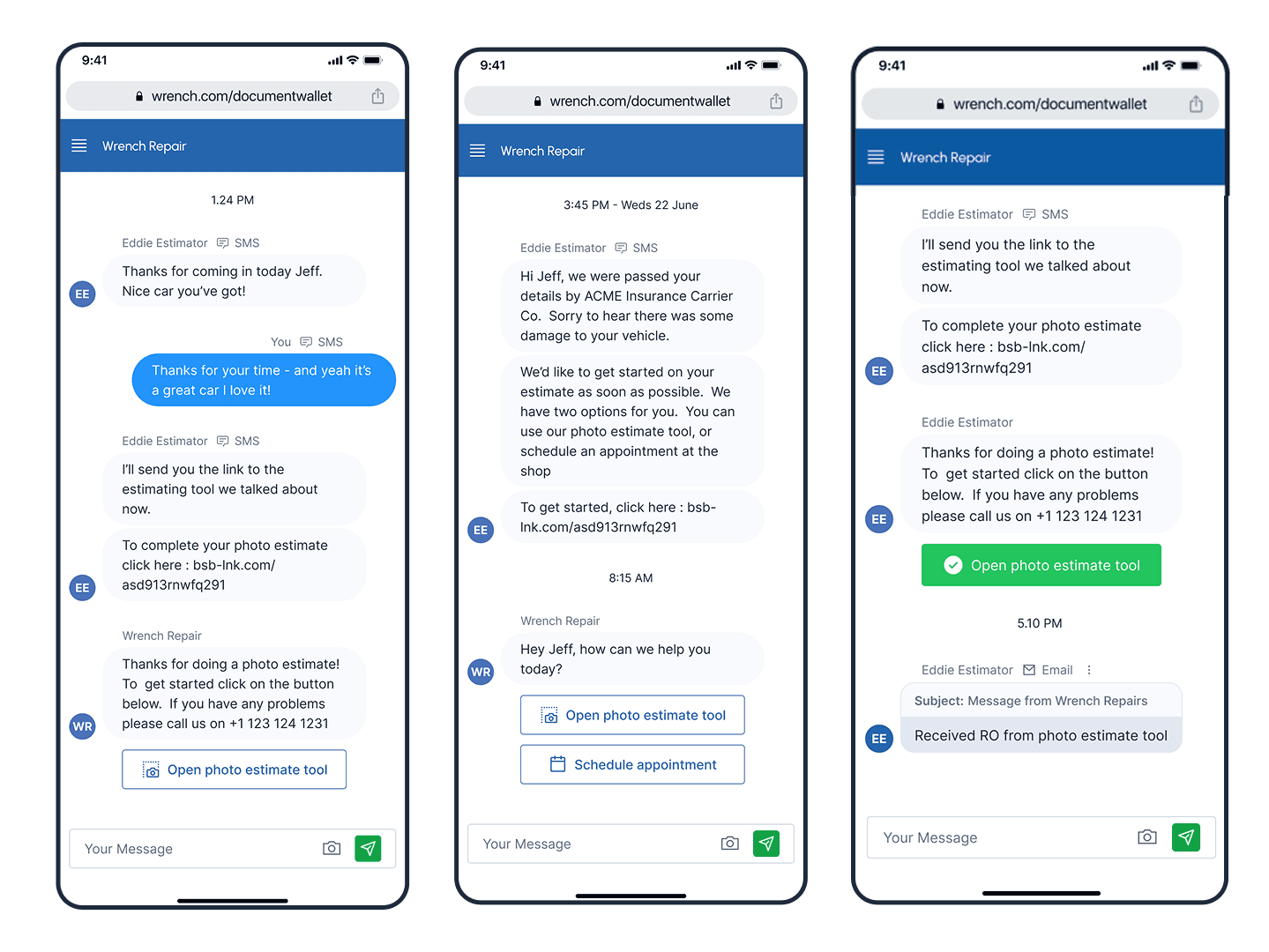
Inside Doc Wallet, the vehicle owner can:
Communicate with the bodyshop
Access Photo Estimate
Submit vehicle information
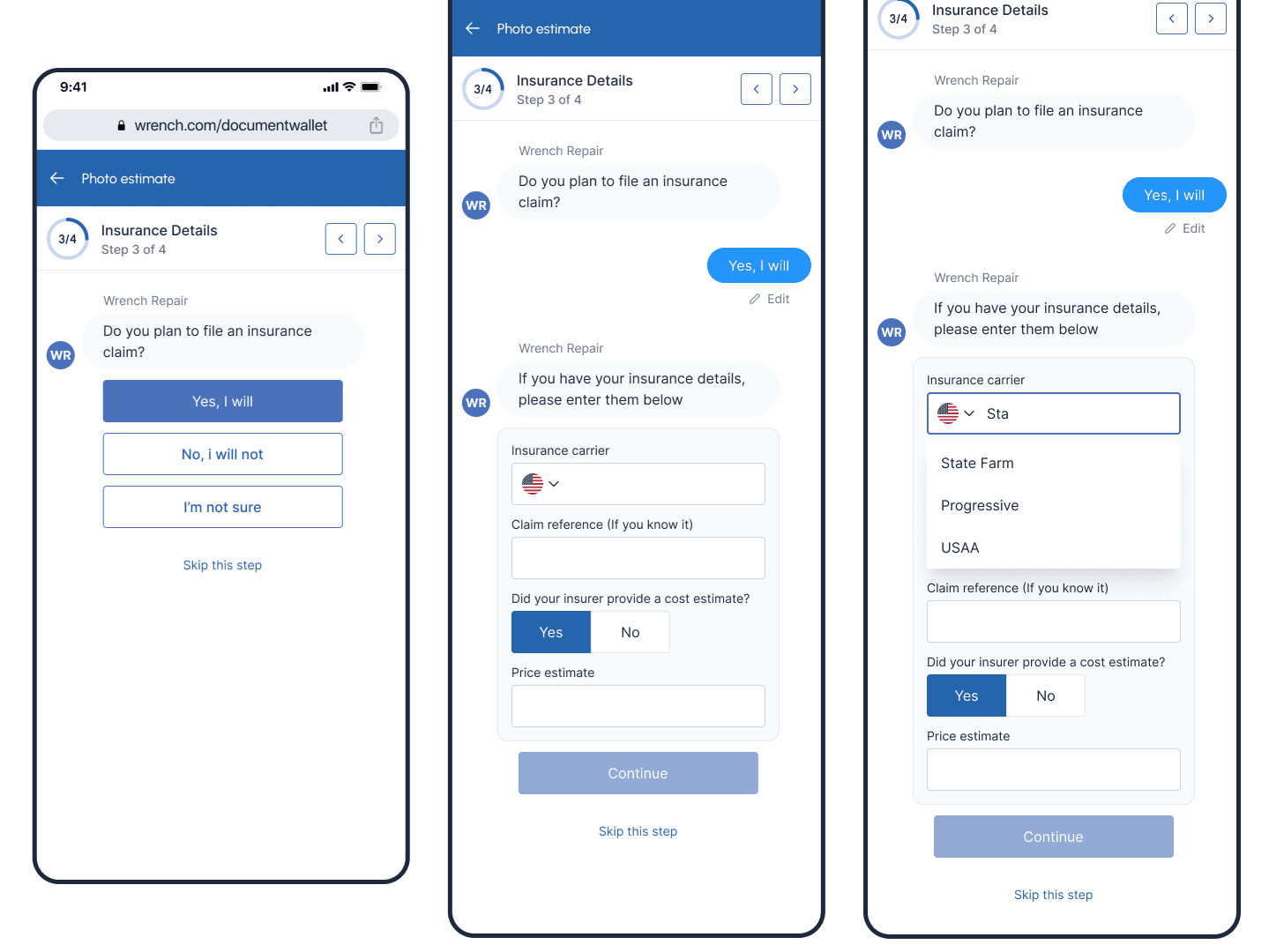
Submit insurance information
Upload damage photos
Receive repair estimates
Review estimates
Approve estimates
Track repair progress
Access repair-related information
This transformed Doc Wallet from a simple document repository into a customer-facing repair workspace.
Turning a physical vehicle assessment into a guided digital experience
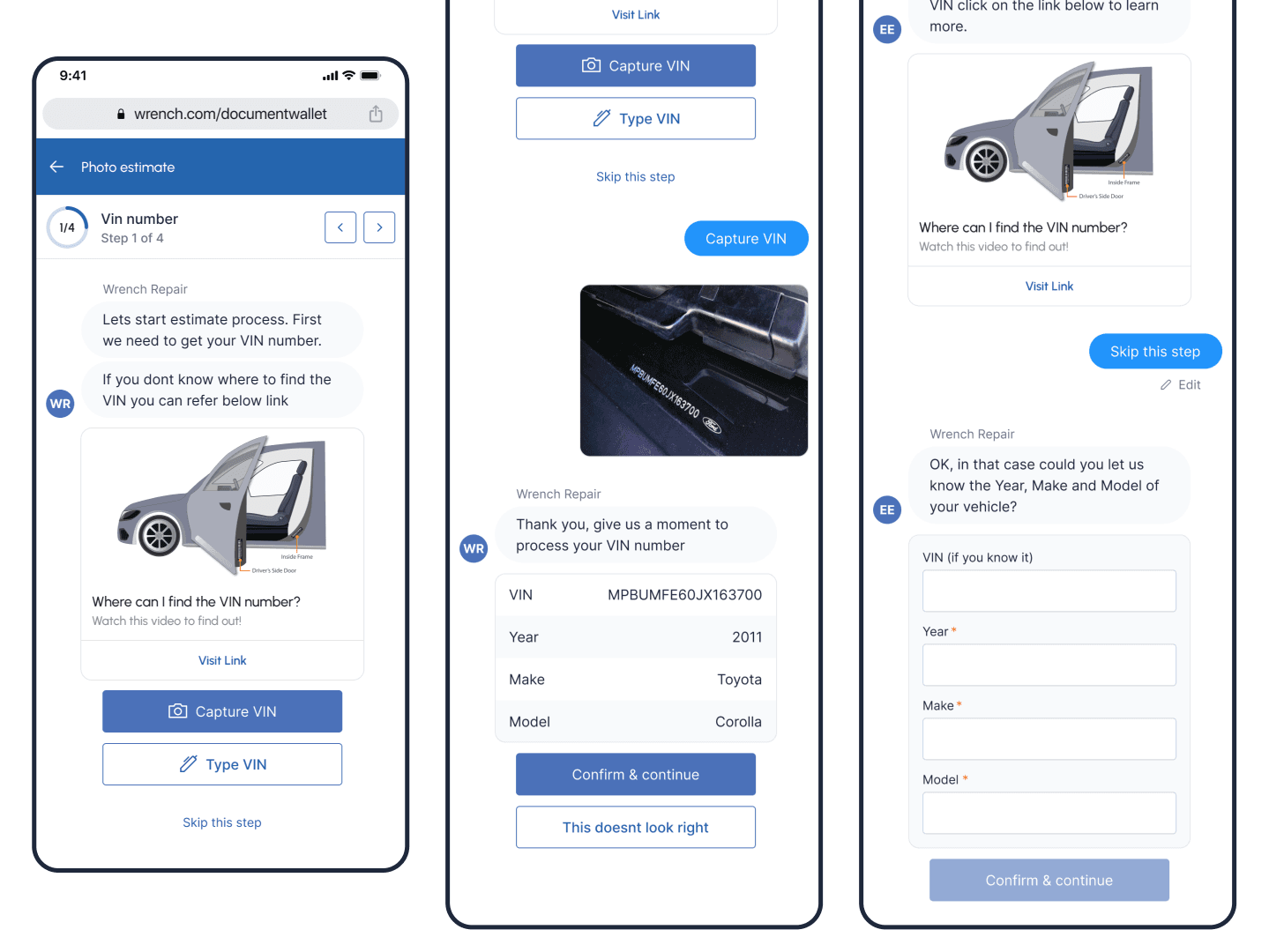
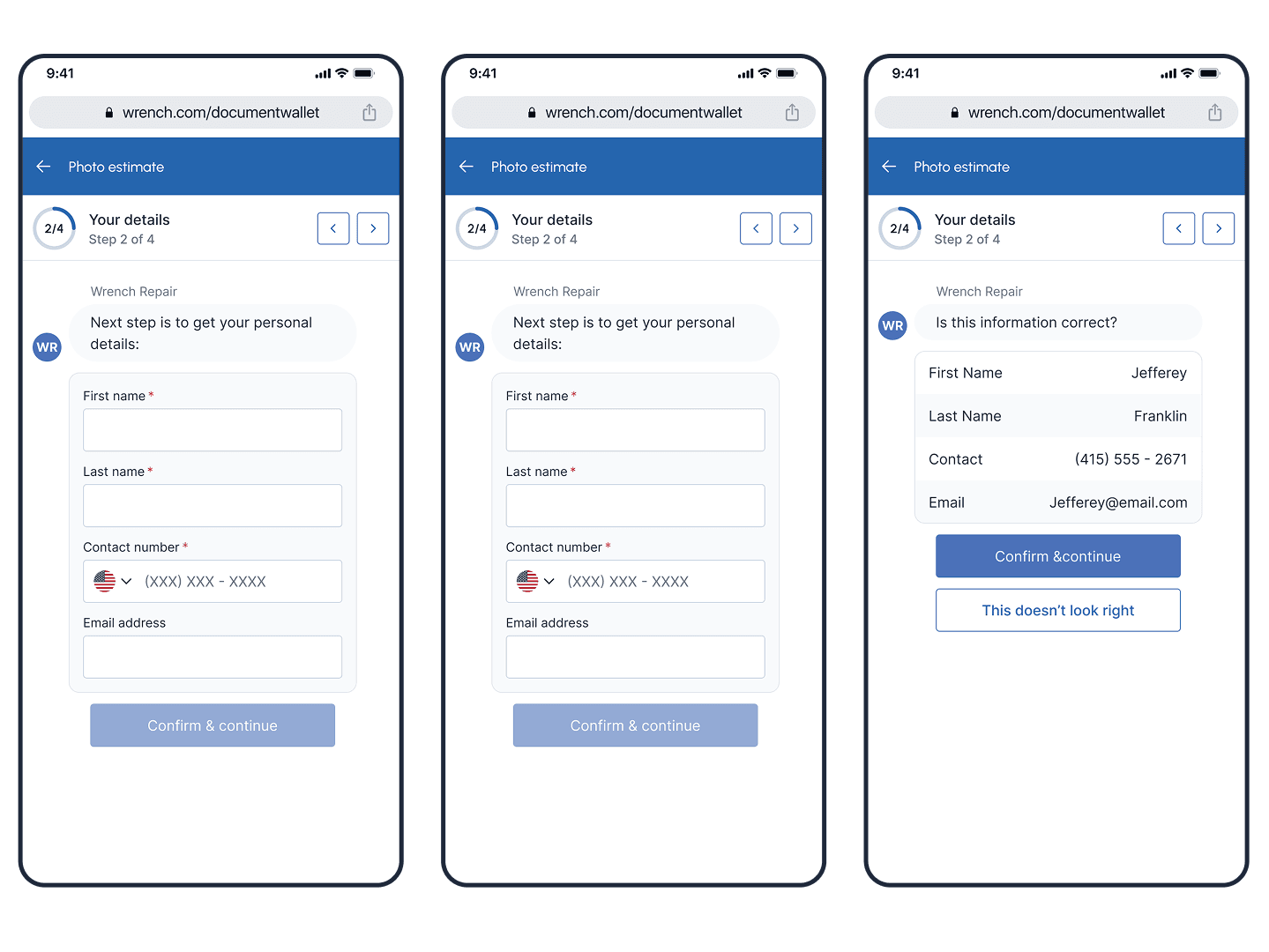
The Photo Estimate flow guides the vehicle owner through the information required by the bodyshop.
Vehicle Identification
Capture:
VIN
Vehicle information
Vehicle Owner
Provide:
Name
Contact information
Relevant owner details
Insurance
Provide:
Insurance information
Policy details
Claim information
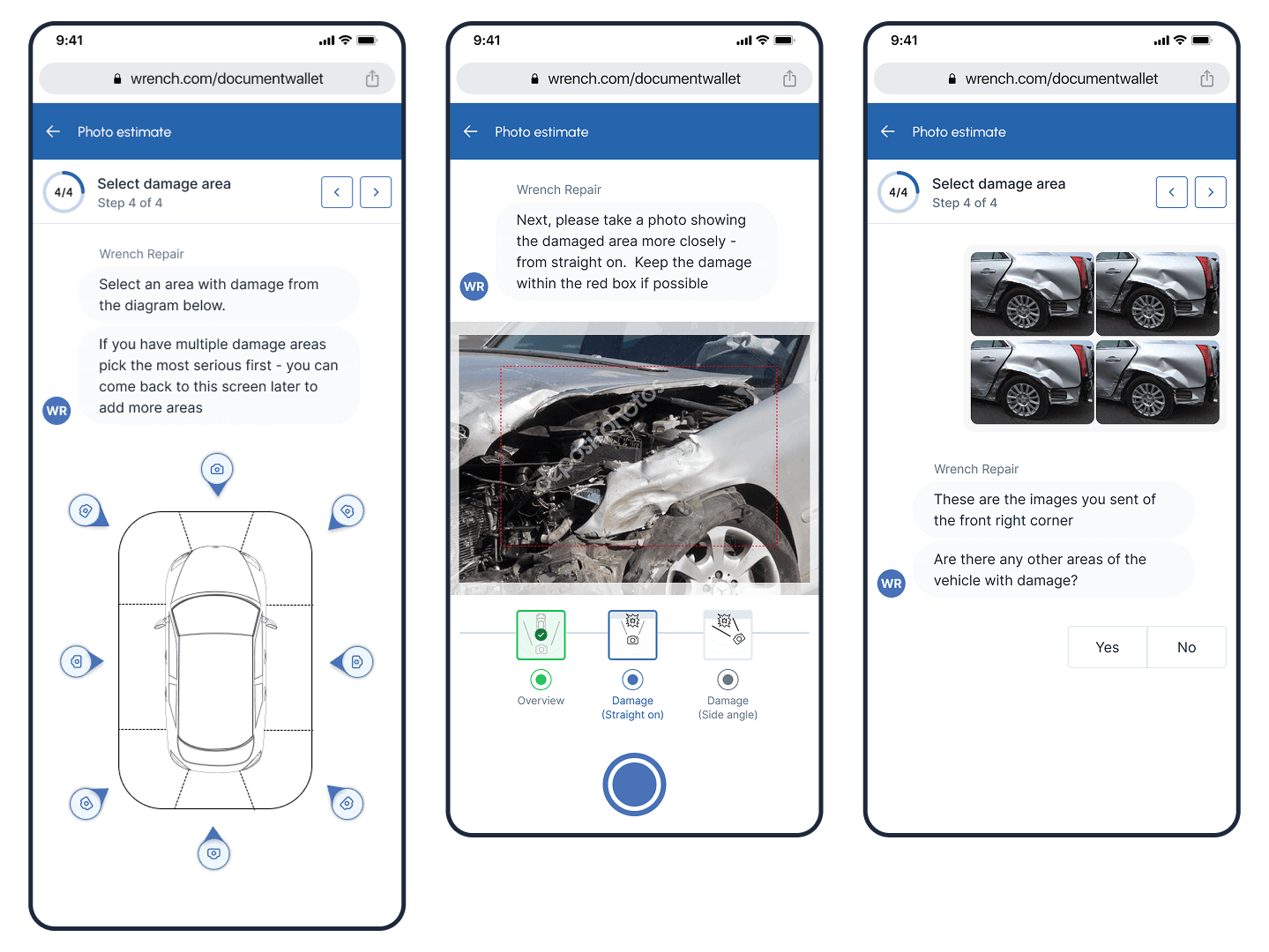
Damage Capture
Capture images of:
Damaged areas
Relevant vehicle angles
Required supporting evidence
Review & Submit
The customer reviews the information before submitting.
CRM Synchronization
Once submitted, the information becomes available to the bodyshop through the CRM.
The vehicle owner doesn't need to repeat the same information through another channel.
When the first design failed, the data told us where to look.
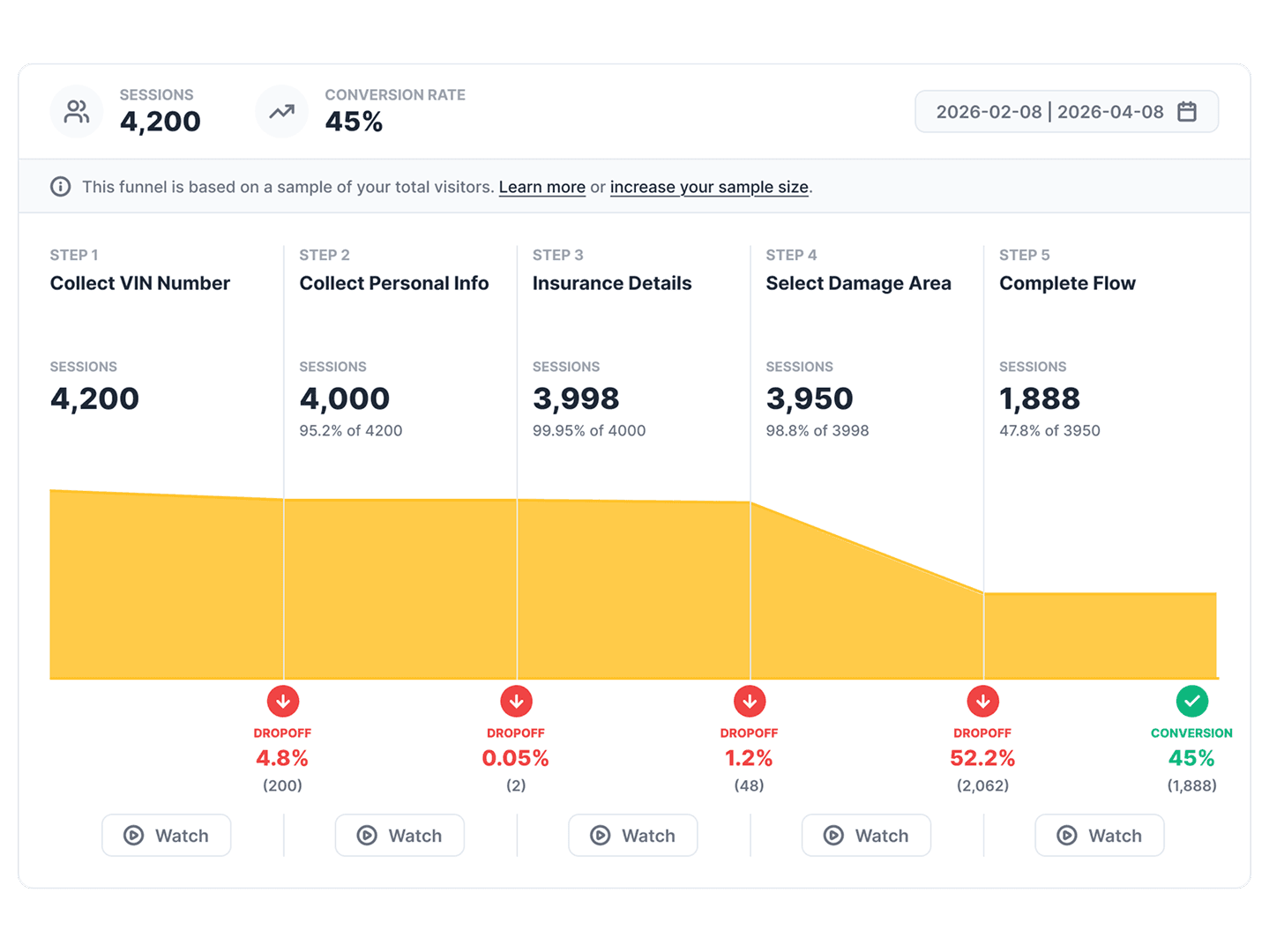
The first implementation of Photo Estimate produced a significant drop-off.
Initial result
55% of vehicle owners abandoned the process
Only:
45% completed the photo capture journey
Instead of assuming the problem was user motivation, I introduced behavioral analytics through Hotjar and conducted usability testing.
What we discovered
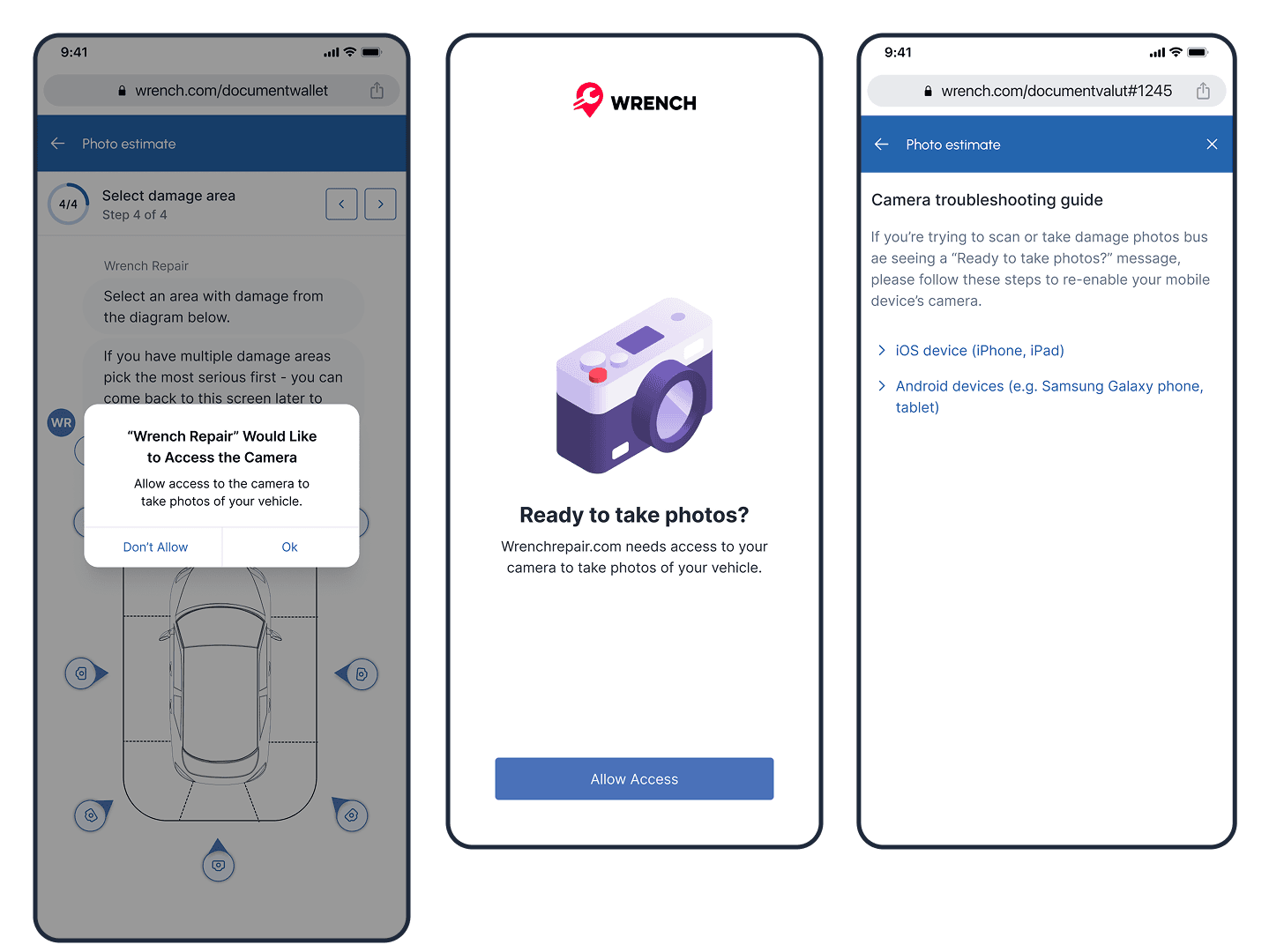
The photo capture interaction created uncertainty.
Users weren't always sure:
What they needed to photograph
Which angle was required
Whether the photo was acceptable
Whether they had captured enough evidence
What to do next
Design response
I redesigned the experience to make the photo capture process:
More guided → More predictable → More forgiving → Easier to complete
The redesigned flow introduced stronger visual guidance, clearer instructions, more obvious progression, better feedback, and a simpler interaction model.
Design response
45% → 88% completion
That means the redesigned experience produced:
+43 percentage points
and approximately:
96% relative improvement in completion rate.
Problem
Solution
UX Impact
Fragmented communication
Created Doc Wallet as a single customer communication hub
Customers had one place to communicate and access repair information
Manual information collection
Created structured digital forms for vehicle, owner, insurance, and damage information
Reduced repetitive information exchange and improved data consistency
Physical assessment dependency
Introduced remote Photo Estimate
Enabled customers to provide vehicle evidence remotely
Low photo completion
Used Hotjar + usability testing to identify photo capture friction and redesigned the interaction
Increased completion from 45% to 88%
Estimate approval delays
Delivered estimates through Doc Wallet to the vehicle owner and insurance stakeholders
Created a more direct path from estimate → review → approval
Delivery
Designing for the moment that matters.
The biggest lesson from the project wasn't about digitizing a paper-based process.
It was about understanding where users lose confidence.
The first Photo Estimate experience proved that simply giving customers a digital way to capture damage wasn't enough. By combining behavioral analytics, usability testing, and iterative design, I identified the friction behind the 55% abandonment rate and redesigned the experience around clarity and confidence.
The result was an increase in completion from 45% to 88%.
The final solution delivered a customer-facing digital ecosystem that connected the vehicle owner with the bodyshop throughout the repair journey.
01 Doc Wallet
A mobile-first repair communication and information hub.
02 Photo Estimate
A guided remote vehicle assessment experience.
03 CRM Integration
Customer-submitted information flows into the bodyshop CRM.
04 Estimate Workflow
Estimates can be delivered digitally for review and approval.
05 Repair Progress
Customers can follow repair progress through Doc Wallet.
06 Research & Iteration
Hotjar and usability testing were integrated into the design process to identify behavioral friction and improve the experience.